
If your birthday falls in October, your birthstone has a surprise waiting inside: flashes of color that seem to move as the gem catches the light. Opal is October’s traditional birthstone, sharing the month with tourmaline. Its soft background and colorful glow make it a beautiful choice for a birthday necklace or a gift with a personal connection. At our jewelry store in Metairie, the featured opal pendants bring that beauty into two decorative designs. Before choosing your favorite, discover the story behind the stone and the tiny details responsible for its remarkable appearance. GIA
Meet the Opal Necklaces at St. Amant Jewelry
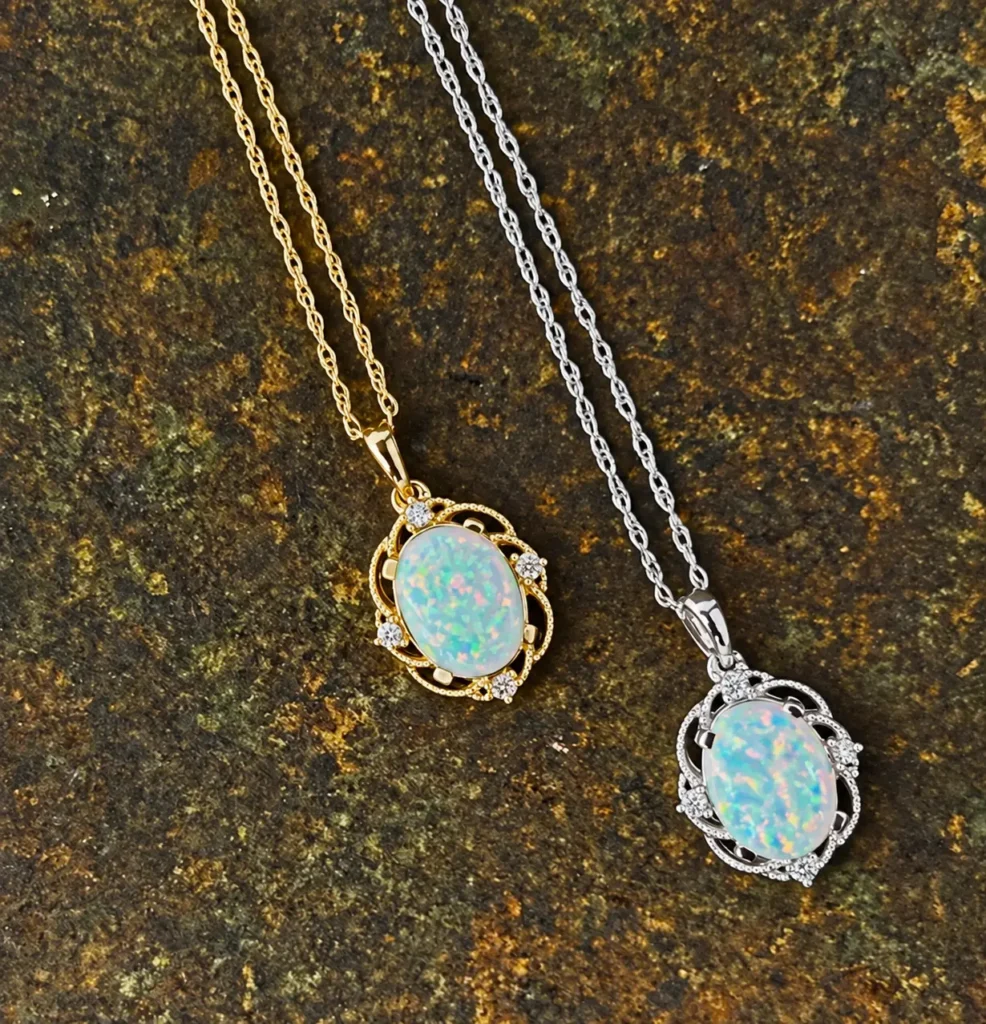
The featured pendants from St. Amant Jewelry place oval opals at the center of curved, openwork settings. In the photograph, the stones show a pale background with patches of green, blue, and pink. Small sparkling accents frame each center, adding brightness without hiding the opal. One pendant has a warm yellow metal tone, while the other has a cool white metal tone. Each hangs from a delicate chain that keeps the attention on the stone. These designs are a lovely introduction to our necklaces in Metairie, especially for someone who enjoys colorful jewelry with fine details.
Why Does Opal Show So Many Colors?
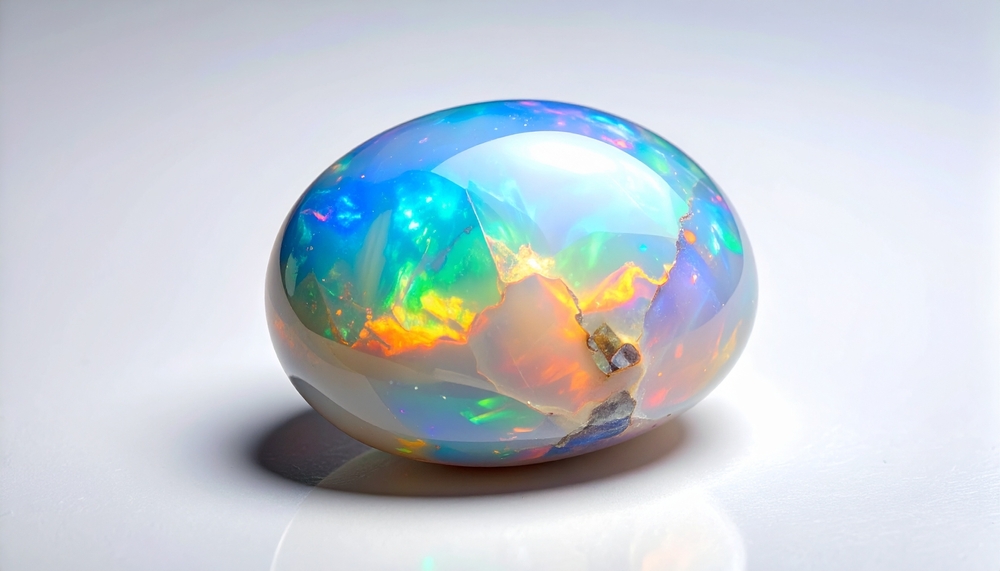
The rainbow effect inside an opal is called play-of-color. It happens because precious opal contains incredibly small silica spheres arranged in repeating patterns. Light passing through that structure bends and separates into visible colors. The size and arrangement of the spheres influence which colors appear. Move the stone, and a different patch may catch the light, making a green flash give way to blue or pink. That is why an opal deserves more than a quick glance: its appearance can shift as you turn it, even though the stone itself stays the same. gia.edu
How Nature Creates This Gem
In nature, opal formation can begin when rainwater seeps into the ground and carries dissolved silica through rock. As water evaporates, silica remains in cracks and spaces beneath the surface. Those deposits can develop into opal. In precious opal, an orderly arrangement of tiny spheres produces the colorful effect we admire. Other opals lack that rainbow display. A finished pendant offers a small glimpse of a much larger geological story: water and silica working together beneath the ground to create a gem that interacts beautifully with light. gia.edu
Where Does Opal Come From?
Australian opals are among the best known, with important deposits found across several parts of the country. Lightning Ridge is famous for black opal, which shows color against a dark background. Coober Pedy and White Cliffs are known for lighter opals, while Queensland produces boulder opal, often with some surrounding rock left attached. Ethiopian opals are another important source, and opal is also found in Mexico and Brazil. These different locations produce a wide range of appearances, from pale stones with colorful flashes to gems with dark backgrounds or warm orange tones. GIA
From Rough Stone to a Finished Pendant
A gem cutter studies an opal’s colors and patterns before deciding how to shape it. Many are finished as opal cabochons, with smooth, rounded tops rather than rows of flat facets. A domed surface helps display the play-of-color, giving the eye room to follow its changing patches. The oval centers in the featured necklaces bring that soft shape into a decorative pendant setting. Their curved outlines echo the surrounding metalwork, while the open spaces around the stones let the center remain the main attraction. The result is a piece with detail both inside the gem and around it. gia.edu
A Birthstone with a Story Worth Giving
Long before opal became a familiar October birthday gift, people admired its unusual appearance. In ancient Rome, it represented love and hope. European traditions later associated it with hope, purity, and truth. Those meanings give a gift an extra layer of thought, whether you are celebrating a daughter, partner, friend, or yourself. An opal necklace connects the wearer’s birth month with a stone that has inspired people for centuries. You do not have to be born in October to enjoy it, either; its colors are reason enough to make it part of your jewelry collection. gia.edu
Caring for Your Colorful Gem
An opal needs gentle handling because it is softer than many other jewelry stones. For opal jewelry care, avoid hard knocks, high heat, and sudden temperature changes. Use warm, soapy water for cleaning, and ask your jeweler about the right method for your particular piece. Steam and ultrasonic cleaners are unsuitable for opal. Keeping your birthstone pendant separate from harder gems also helps prevent scratches. These simple habits let you enjoy its color while protecting the stone and the decorative details that make your necklace special. gia.edu
Discover Your Birthstone in Metairie
Ready to see October’s birthstone up close? Visit St. Amant Jewelry at 800 Metairie Road, Suite U, to ask about the featured opal necklaces and explore the collection. Compare the warm and cool tones of the settings, notice the details around each stone, and see how the colors respond to the light. Whether you are choosing an October birthday present or treating yourself, a birthstone necklace gives you a beautiful way to celebrate the month.